Lawyers on Reels? SC Examines Plea Against Social Media Promotion
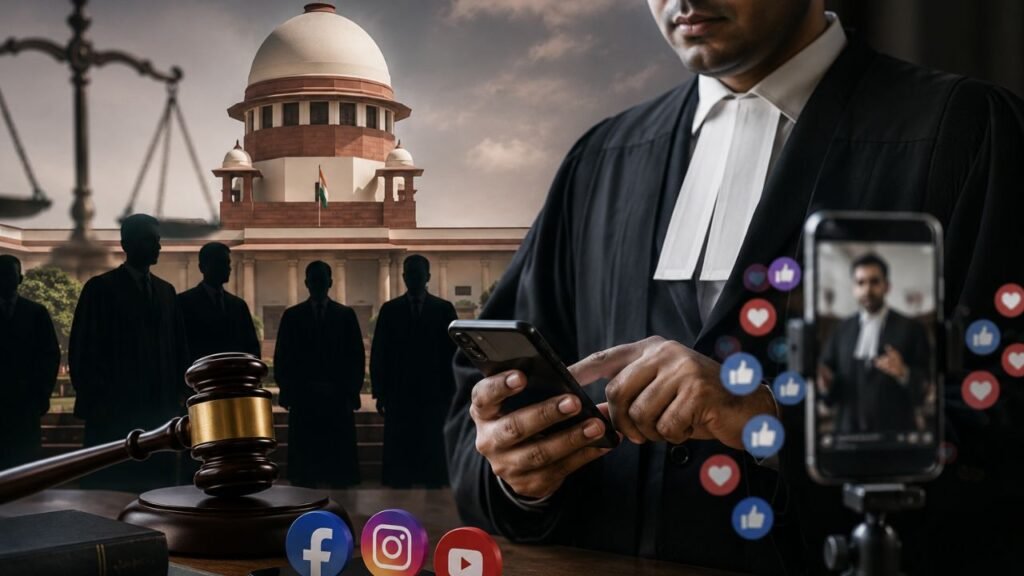
Representative Image of Supreme Court and Reel Makers Advocates.
The Supreme Court of India has directed State Bar Councils to respond to a Public Interest Litigation (PIL) highlighting the growing trend of lawyers promoting themselves aggressively on digital platforms. A bench led by Chief Justice Surya Kant, along with Justices Joymalya Bagchi and V Mohana, issued notices on the petition filed by Anil Pandey.
Core Issue Raised in the PIL
The petition argues that many advocates are openly soliciting clients through Instagram reels, YouTube videos, Facebook posts, and influencer-style content. These often include contact details, success claims, client testimonials, and dramatic courtroom recreations. A significant portion is filmed inside court premises while lawyers wear formal attire, turning judicial spaces into personal marketing studios.
Why This Matters?
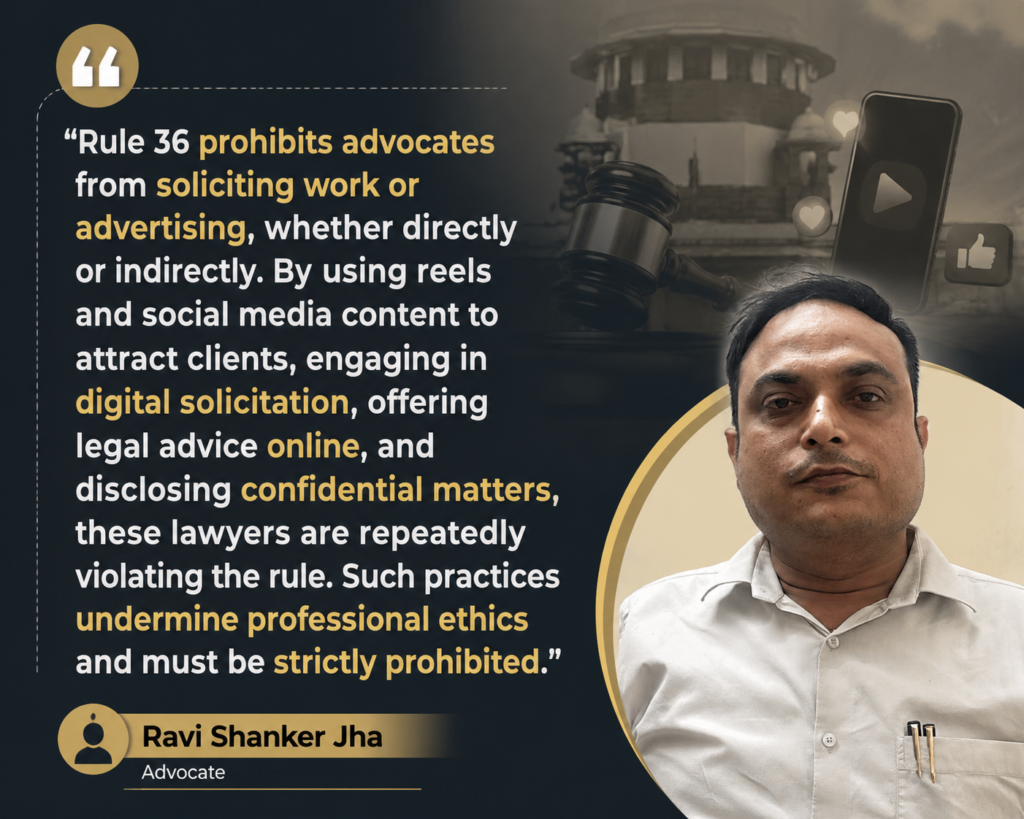
Violation of Professional RulesUnder the Advocates Act, 1961, and Bar Council of India Rules (particularly Rule 36), lawyers are prohibited from advertising or soliciting work. The PIL contends that labeling such content as “legal awareness” or “know your rights” does not change its primary purpose—self-promotion and client acquisition. This practice is seen as commercializing the legal profession and undermining its dignity.Key allegations include:Rampant digital touting
Misuse of court corridors and halls for filming
Paid collaborations and monetized content
Sensationalized coverage of cases to attract litigants
What the Petitioner Wants?
Anil Pandey has urged the court to:Initiate disciplinary action against violators
Ban photography and videography by lawyers in court and tribunal premises
Direct the Bar Council of India to create clear guidelines for lawyers’ online conduct
Broader ImplicationsThis case raises important questions about balancing modern digital outreach with traditional legal ethics. While social media can help educate the public, unchecked promotional tactics risk eroding public trust in the judiciary and turning justice into a marketing game. The Supreme Court’s response could set nationwide standards for professional conduct in the digital age.