Why India’s Youth Are Fighting a Crisis of Accountability?
Dharmendra Pradhan
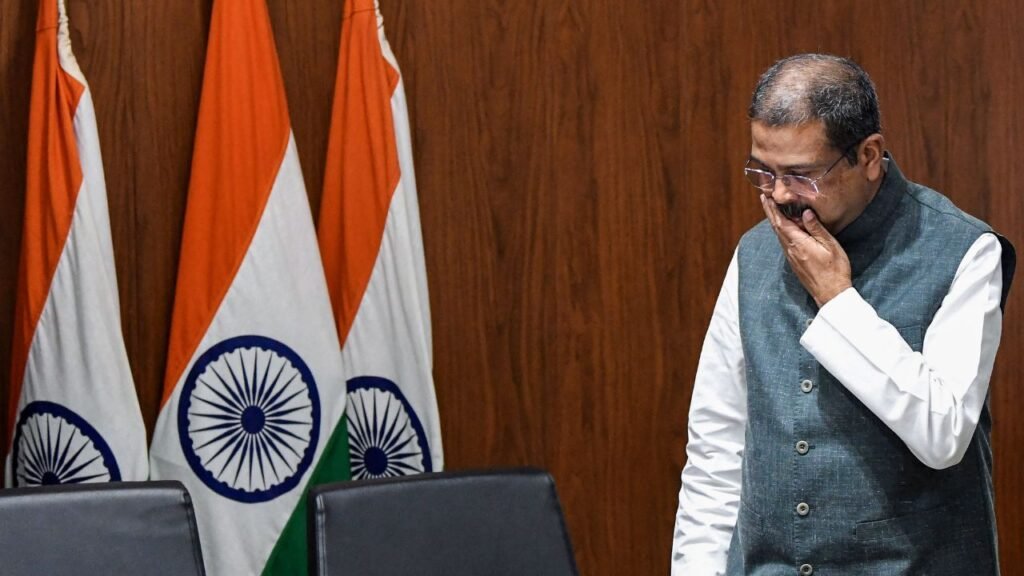
Dharmendra Pradhan’s resignation may have closed one political chapter, but it has not resolved the crisis that brought millions of students onto the streets. If anything, the celebrations over a minister’s exit risk distracting from the larger and more uncomfortable question: Why does accountability in India arrive only after public outrage reaches a breaking point?
For over a decade, India’s governance model has projected decisiveness as its greatest strength. Elections have been won on the promise of strong leadership, quick decisions, and political stability. But strength should not be measured by how long a government refuses to acknowledge mistakes. Real strength lies in correcting errors before citizens are forced to launch nationwide protests.
The paper leak crisis was never merely about one examination. It represented the collapse of trust in a system that determines the future of millions. Every leaked question paper sends a devastating message: hard work is optional if the system itself can be manipulated. For students who spend years preparing, often sacrificing family income, social life, and mental health, a compromised examination is not an administrative lapse—it is a theft of opportunity.
The government’s response exposed a familiar pattern. Initial denial. Defensive messaging. Attempts to minimize the scale of the problem. Promises of investigations. Only after sustained protests, growing public anger, and undeniable political costs did accountability finally arrive in the form of a ministerial resignation.
This raises a troubling question. If the protests had not grown this large, would anything have changed?
Democracies are healthiest when institutions correct themselves before the streets are forced to intervene. Ministers should not resign because protests become politically inconvenient; they should resign when systemic failures occur under their watch. Accountability should be institutional, not emotional.
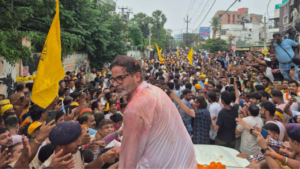
What makes the student movement remarkable is not merely its size but its character. Unlike traditional political mobilizations, this generation did not wait for established organizations to tell them when to protest. They organized through digital networks, fact-checking groups, student communities, and social media platforms. Leadership was distributed rather than centralized. That made the movement difficult to discredit and even harder to suppress.
Yet the deeper story is not about social media. It is about expectations.
India’s young population has grown up hearing that education is the pathway to success. Families invest enormous emotional and financial resources in competitive examinations. When those examinations become vulnerable to organized cheating, the social contract between the state and its youth begins to fracture.
The resignation of one minister cannot repair that contract.
The real test begins now.
Will examination agencies become genuinely independent? Will paper leak investigations result in convictions rather than headlines? Will technology be used to strengthen transparency instead of merely increasing surveillance? Will recruitment timelines become predictable? Will students receive compensation when state failures force repeated examinations?
These are the reforms that matter.
There is another uncomfortable lesson for every political party.
Governments often believe that electoral victories provide a reservoir of public trust. They do—but only temporarily. Trust is renewable only through competent governance. It cannot survive indefinitely on political branding, campaign slogans, or communication strategies. Young voters are increasingly judging governments less by ideological narratives and more by everyday administrative performance.
That shift may redefine Indian politics over the next decade.
The opposition should not celebrate too quickly either. Public anger over examinations is not an endorsement of alternative political parties. Students are demanding better governance, not merely different rulers. Any party that treats youth frustration as an electoral opportunity rather than a governance challenge will eventually face the same backlash.

The resignation therefore should not become a symbol of political defeat or victory. It should become a warning.
India cannot aspire to become a global knowledge economy while repeatedly failing to protect the integrity of its own examinations. Every leaked paper damages not only individual careers but also international confidence in India’s educational institutions and public recruitment systems.
History rarely remembers resignations. It remembers reforms.
If this episode leads to transparent recruitment, stronger institutions, faster investigations, and genuine ministerial accountability, the protests will have achieved something historic.
If it ends with one resignation, one cabinet reshuffle, and the usual promises, the next movement is only a matter of time.
Because young Indians are no longer asking for sympathy.
They are asking for a system that deserves their trust.